


Most construction marketing advice is bad because it treats tactics like magic tricks. Post on Instagram. Boost a Facebook post. Run some ads. Ask for reviews. None of that is a strategy. That’s a bucket of random parts.
A marketing strategy for construction business growth works more like a build plan. You need the sign out front, the showroom inside, the road that brings people in, and the office staff who answers when someone calls. If one piece is missing, the whole thing leaks money.
That’s why so many contractors feel stuck. They spend on a website that doesn’t convert, ads that bring junk leads, or social posts that get attention but not projects. Then they assume marketing doesn’t work. Marketing works. Disconnected marketing doesn’t.
The fix is simple to understand, even if it takes discipline to do. Build one connected system from first click to final handshake. That means your Google presence, your website, your lead follow-up, and your scorecard all need to work together. If you want a plain-English look at what usually goes wrong, this breakdown of costly marketing mistakes remodelers keep making is worth your time.
Table of Contents
- Why Your Marketing Feels Like Guesswork
- Decide Who You Want to Work For
- Build Your Digital Showroom and Sign
- Attract Customers Ready to Build Now
- Stop Leads from Slipping Through the Cracks
- How to Know Your Marketing Is Working
- Your 90-Day Quick-Start Marketing Plan
Why Your Marketing Feels Like Guesswork
Contractors usually don’t have a marketing problem first. They have a systems problem.
Somebody told you to “just post more.” Somebody else told you to buy leads. Another person said SEO is all you need. That advice sounds fine until you look at your calendar and realize the phone is inconsistent, the leads are mixed quality, and your team has no clue which effort brought in the good jobs.
Random tactics create random results
If your website says one thing, your ads target another thing, and your follow-up happens whenever someone remembers, your results will always feel shaky.
That’s not because construction is hard to market. It’s because disconnected pieces don’t build trust.
Think about a kitchen remodel. You wouldn’t order cabinets, tile, and lighting from three places, toss them on the floor, and call it a finished room. You need a plan, sequence, and clean handoff from one stage to the next. Marketing works the same way.
What a working system looks like
A healthy marketing system has four parts:
- Front door: Your Google Business Profile and local visibility.
- Showroom: Your website, photos, reviews, and service pages.
- Traffic source: Google Ads and search visibility that bring in real homeowners.
- Follow-up engine: A CRM, text-back, and task reminders so no lead gets ignored.
Miss one part and the system breaks.
Practical rule: Don’t buy more traffic until you know what happens after the call, form fill, or missed call.
Why guesswork feels expensive
Guesswork is expensive because it hides the leak.
You might think ads are failing when the underlying problem is slow callbacks. You might blame the website when the issue is that you’re attracting the wrong type of customer. You might think marketing is weak when your sales process is the thing killing deals.
That’s why a smart marketing strategy for construction business growth starts with the whole path, not a single channel. You need to know who you want, how they find you, what they see, and what happens in the first few minutes after they reach out.
When you fix that, marketing stops feeling like gambling. It starts acting like a machine.
Decide Who You Want to Work For
If you market to everybody, you attract a mess.
That’s the part many owners hate hearing, because saying no feels risky. But saying yes to every type of customer is exactly how you end up with weak messaging, weak leads, and a sales team wasting time on jobs you never wanted in the first place.

Stop chasing every kind of job
Consider fishing as an analogy.
You can fish for lots of tiny fish, or a few big fish. The bait is different. The location is different. The gear is different.
It’s the same in remodeling.
If you want premium kitchen remodels, home additions, or outdoor living projects, your marketing has to speak to homeowners who care about trust, timelines, design quality, and a smooth process. It can’t sound like a handyman ad.
Build a simple buyer picture
You do not need a fancy corporate worksheet. You need a clear picture of the person you want to work for.
Write down answers to these questions:
- What kind of project do they want? Kitchen, bath, addition, roofing, outdoor living.
- What budget range fits your business? Only define it internally if you don’t want to publish it.
- Where do they live? Specific cities, zip codes, or neighborhoods.
- What do they worry about? Delays, bad communication, poor craftsmanship, crews not showing up.
- Why do they choose one contractor over another? Trust, proof, process, financing clarity, design help.
That’s your buyer persona in plain English.
Creating buyer personas through data analytics can boost conversion rates by up to 25% by matching your message to specific segments, and data-driven goal setting such as aiming for a 25% increase in qualified leads is a strong starting point, according to Market Veep’s construction marketing strategy guide.
The best leads usually come from clear positioning, not louder promotion.
Pick one clear target
Bad goal: “We want more leads.”
Good goal: “We want more qualified kitchen and bath leads in our service area.”
Better goal: “We want more qualified leads from homeowners who fit our project type, budget, and location.”
Notice what changed. The goal got narrower. That’s good. Narrow goals produce better campaigns.
Use this quick filter when deciding who to target:
| Question | Good answer | Bad answer |
|---|---|---|
| Project type | A specific service you want more of | “Anything construction-related” |
| Area | Towns you can serve well | “Anywhere within driving distance” |
| Buyer fit | Homeowners who match your process | Anybody with a pulse |
| Sales value | Jobs worth your team’s time | Small jobs that clog the pipeline |
A focused target also helps your field team. Estimators stop chasing bad-fit calls. Office staff knows which leads matter. Your website copy becomes sharper. Your ads stop bleeding money on the wrong searches.
When owners skip this step, everything downstream gets harder. Their photos are mixed. Their service pages are vague. Their ad copy sounds generic. Their close rate suffers because the wrong people are walking through the door.
That’s why this part comes first. Before you build traffic, build aim.
Build Your Digital Showroom and Sign
Most contractors treat their online presence like a business card. That’s too small.
Your digital presence should work like a jobsite sign plus a polished showroom. One gets people to notice you. The other gets them to trust you.
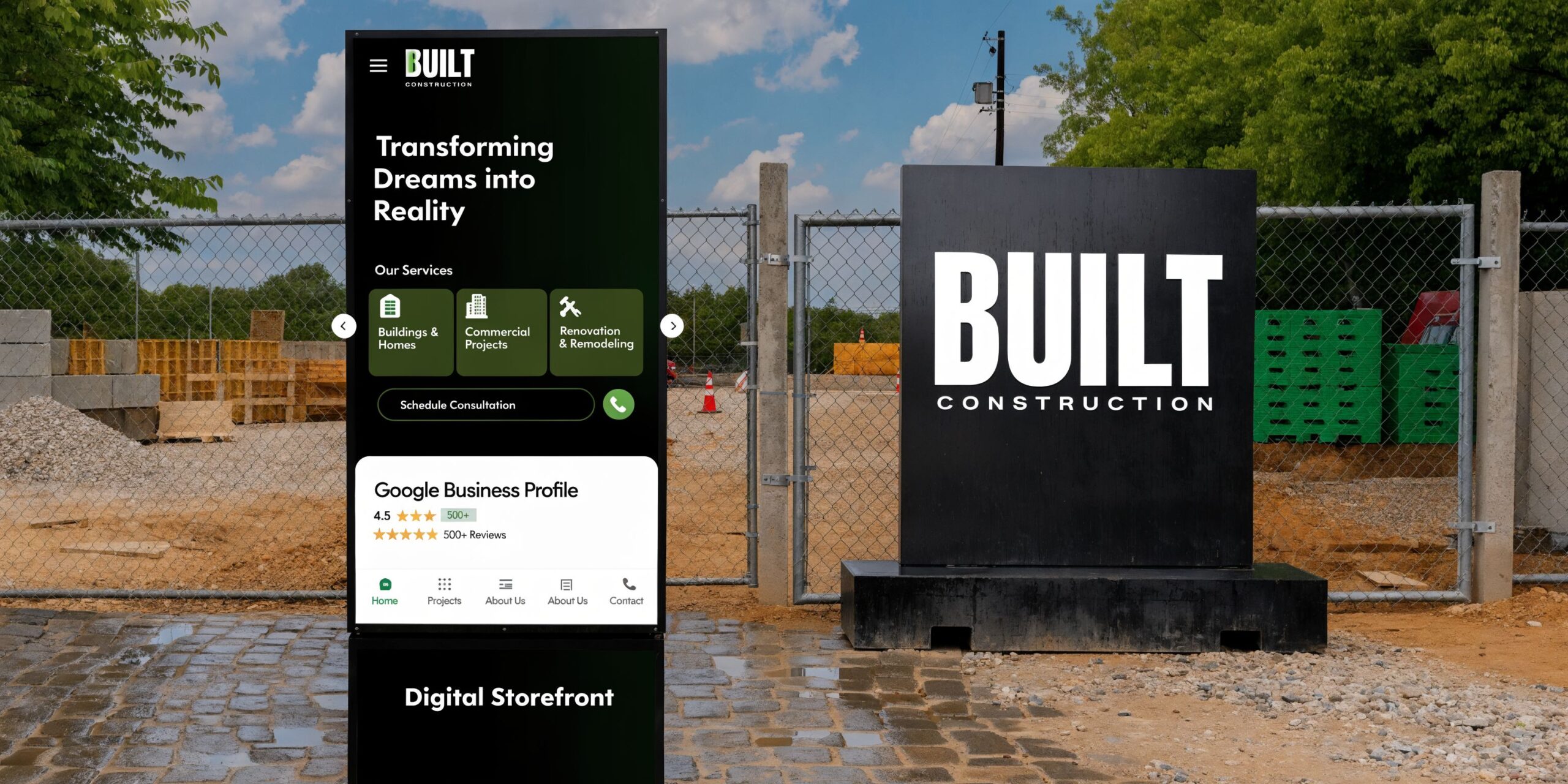
Your Google Business Profile is the sign on the road
Your Google Business Profile is the first thing many local homeowners will see. It needs to be complete, accurate, active, and convincing.
The construction industry sees 1.7 million online searches for independent contractors each month, and 62% of customers ignore businesses without a web presence, which shows the importance of an effective online presence, based on WebFX construction statistics.
If your profile is half-finished, has old photos, or points to a weak site, you’re telling buyers you run a loose operation.
Make sure your profile includes:
- Correct basics: Business name, phone, website, hours, and service area.
- Real job photos: Not stock shots. Show kitchens, baths, additions, exteriors, and detail work.
- Clear service categories: Tell Google and homeowners what you do.
- Review flow: Ask every happy client. Reviews are trust signals.
- Fresh updates: Post project photos and short updates so the profile doesn’t look abandoned.
If you want a practical cleanup list, this Google Business Profile optimization checklist for remodelers is useful.
Your website is the showroom
Once someone clicks through, your website has one job. Build trust fast and make the next step easy.
That’s it.
Too many contractor sites try to look fancy and forget to sell. Slow load times, vague copy, generic stock photos, and hidden contact forms kill good leads.
A strong website for a remodeler should feel like walking into a clean showroom with your best work on display.
For a deeper breakdown, this guide on how to design a remodeling website that converts visitors into leads covers the basics well.
What high-value homeowners need to see
These elements are essential:
- Project galleries: Show before-and-after photos if you have them. Show craftsmanship.
- Service pages: Give each core service its own page.
- Testimonials: Use homeowner feedback that speaks to trust, communication, and quality.
- Simple quote path: Put the call button and form where people can find them.
- Process explanation: Tell buyers what happens after they contact you.
- Location proof: Mention the towns and areas you serve.
If a homeowner can’t tell what you do, where you do it, and why you’re trustworthy in a quick visit, your website isn’t helping.
One more point. Landing pages matter. If you’re sending Google Ads traffic to a generic homepage, you’re making people work too hard. The page should match the search. Someone searching for kitchen remodeling shouldn’t land on a broad “welcome to our company” page.
If you want a clean explanation of that, this article on how to create a landing page that converts is a good resource.
Your site doesn’t need clever wording. It needs clarity. Show the work. Prove the trust. Make contact easy.
Attract Customers Ready to Build Now
Once your online foundation is solid, you need traffic from people shopping for a contractor.
There are two main ways to do that well. One is fast. One compounds. Good companies use both.
Google Ads is the fast lane
Google Ads puts you in front of people who are searching right now.
That’s why it’s useful for a construction company that wants leads this month, not just next year. If somebody types in a service plus a location, they’re raising their hand.
A useful campaign is simple. Tight location targeting. Specific service keywords. Clear landing page. Strong follow-up.
An integrated strategy using Google Ads and local SEO can work well in construction. The click-through rate benchmark for construction keywords is around 3.5%, there is potential 10x ROI, and ranking high in Maps matters because 46% of Google searches have local intent, according to Gushwork’s construction marketing strategy breakdown.
Good ad examples look like this:
- Kitchen remodeler in [city]
- Bathroom remodeling contractor [city]
- Home addition contractor near me
- Roof replacement company [city]
Bad campaigns go broad and invite junk.
Examples:
- “Home services”
- “Construction help”
- “Remodeling ideas”
Those clicks may look busy in a dashboard, but they often don’t turn into real opportunities.
For more tactical ideas, this Modern Playbook for Lead Gen for Contractors is worth reviewing.
SEO content is the long game
SEO content doesn’t hit as fast, but it builds trust and visibility over time.
Think of it as showing Google and homeowners that you know your craft, your market, and the questions buyers ask before they hire. Project pages, local service pages, FAQs, and educational articles are how these efforts earn their keep.
Useful content topics include:
| Content idea | Why it works |
|---|---|
| Cost guides for a project type | Buyers want budget clarity before they call |
| Project gallery pages by service | Homeowners want proof |
| Local service pages | Helps match local searches |
| Process pages | Reduces fear and confusion |
| Common mistakes articles | Builds trust through education |
A remodeler could publish content around kitchen planning, bath renovation timelines, or choosing between a bump-out and a full addition. A roofer could answer homeowner questions about replacement versus repair. A design-build firm could explain how pre-construction planning works.
Use both without making a mess
Ads and SEO shouldn’t fight each other. They should divide the workload.
Use Google Ads for immediate demand. Use SEO content and local SEO for durable visibility.
A simple rule:
- Run ads on your money services.
- Build content around common buyer questions.
- Send paid traffic to focused landing pages.
- Send organic traffic to service pages, project pages, and educational resources.
Fast lead flow comes from ads. Durable lead flow comes from trust built over time.
The mistake is picking one because it sounds cheaper or easier. That’s short-term thinking. Ads without strong organic presence keep you renting attention. SEO without any paid traffic can be painfully slow when you need booked estimates now.
The smarter move is balance.
Stop Leads from Slipping Through the Cracks
A lot of contractors think marketing ends when the phone rings.
That’s wrong.
Marketing is not just lead generation. Marketing includes what happens in the minutes and days after somebody reaches out. If your team is slow, scattered, or inconsistent, you can waste good opportunities without even realizing it.
Most contractors lose the lead after they pay for it
This is the ugly part nobody likes talking about.
Industry reports indicate that 70% of remodeler leads go cold because of slow or inconsistent follow-up, only about 15% of firms use automated CRM funnels, and missed-call text-back systems can improve close rates by as much as 25%, according to ServiceTitan’s construction marketing article.
That means a lot of businesses don’t have a lead problem. They have a response problem.
If a homeowner calls during a site visit and nobody answers, what happens next? In too many companies, nothing. Maybe somebody remembers later. Maybe they don’t.
That’s not a marketing issue. That’s a leak in the bucket.
What your CRM should do every day
A CRM is just a system that remembers what your team forgets.
You don’t need to think of it as complicated software. Think of it as a digital receptionist and sales coordinator that never takes a lunch break.
A useful CRM setup should handle things like:
- Missed-call text-back: If you miss a call, the system sends a text right away.
- Lead capture: Website forms, calls, and messages go into one place.
- Task reminders: Your estimator or office manager gets prompted to follow up.
- Status tracking: New lead, contacted, appointment set, estimate sent, won, lost.
- Nurture messages: Gentle follow-up for people who aren’t ready today.
If you use tools like GoHighLevel or another contractor-friendly CRM, these basics are not hard to set up. The hard part is deciding to stop winging it.
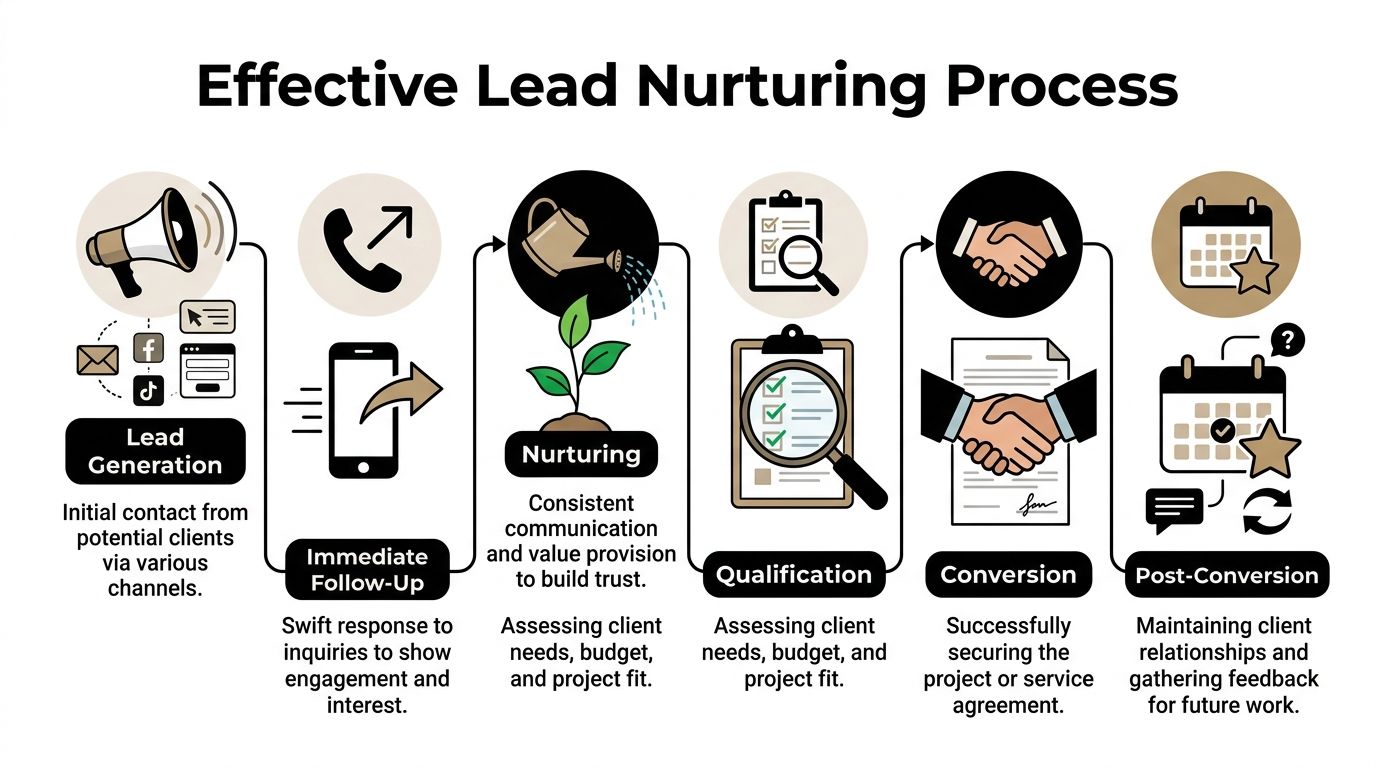
A simple lead handling flow
Here’s the plain version of how this should work:
- Lead comes in from Google Ads, SEO, Maps, referral, or direct traffic.
- System responds fast with a text or email confirmation.
- Team qualifies the lead for fit, project type, area, and timing.
- Appointment gets booked or the lead gets put into follow-up.
- Estimate and decision stages are tracked so nobody disappears.
- Past clients stay in the system for reviews, referrals, and future work.
That’s not fancy. It’s disciplined.
A missed call from a serious homeowner is not a small mistake. It’s a lost shot at a large project.
The owners who tighten this part usually stop complaining that their marketing “brings bad leads.” Often the lead was fine. The handling was bad.
If you’re serious about profitable growth, stop thinking of CRM as admin work. It’s part of your sales engine.
How to Know Your Marketing Is Working
A lot of contractors stare at the wrong scoreboard.
They look at likes, reach, clicks, or website traffic and assume that means progress. It doesn’t. Those numbers can be useful, but they are not the final test.
If marketing isn’t producing qualified conversations, booked appointments, sold work, and revenue, the pretty dashboard doesn’t matter.

Ignore pretty numbers
Many contractors misjudge ROI by focusing on vanity metrics like likes and shares. 62% make this mistake, while close rates can improve from an 18% industry average to 35% with proper KPI tracking and coaching, according to Treblehook’s guide to marketing in the construction industry.
That should change how you judge your marketing.
A post with lots of likes may do nothing for your pipeline. A low-drama Google campaign that brings in qualified estimate requests may be far more valuable.
Use a simple scorecard
You don’t need a giant reporting system. You need a short list your team can review every month.
Track the numbers that answer these questions:
- How many qualified leads came in?
- Where did they come from?
- How many turned into appointments?
- How many estimates turned into sold jobs?
- How much revenue came from those jobs?
If you can’t answer those, you’re guessing.
Simple Marketing Scorecard Example
| What to Track | Example Goal | Why It Matters |
|—|—|
| Qualified leads | More of the right project inquiries | Tells you if marketing is attracting fit, not noise |
| Lead source | Know whether Maps, ads, referrals, or organic brought the lead | Shows where to invest more |
| Response speed | Contact new leads quickly and consistently | Fast follow-up protects expensive opportunities |
| Appointment rate | Turn inquiries into real consultations | Shows lead quality and front-office discipline |
| Close rate | Improve estimate-to-job conversion | Connects marketing to sales performance |
| Revenue from marketing | Tie sold work back to source | This is the score |
A few warnings:
- Don’t track everything. Too much reporting makes owners ignore the report.
- Don’t judge channels too early. Some lead sources take longer to prove themselves.
- Don’t separate marketing from sales. They affect each other.
Good marketing doesn’t just create activity. It creates profitable work you can trace back to a source.
If you review this scorecard monthly, patterns get obvious. You’ll see which services convert better, which towns produce stronger leads, and whether your problem is traffic, follow-up, or closing. That’s how you stop making emotional decisions with your budget.
Your 90-Day Quick-Start Marketing Plan
Most owners wait too long because they think they need everything perfect before they begin.
You don’t.
You need a working version of the system. Then you improve it.
Days 1 through 30
Start with the foundation.
- Choose your target customer: Pick the project types, locations, and buyer fit you want.
- Clean up your Google Business Profile: Fix wrong info, add job photos, update services.
- Tighten your website: Make sure it clearly shows services, project photos, trust signals, and an easy contact path.
- Decide what counts as a qualified lead: Write it down so your team uses the same standard.
This first month is about clarity. If you skip it, everything later gets muddy.
Days 31 through 60
Now bring in demand.
- Launch a small Google Ads campaign: Focus on your highest-value service in one target area.
- Build one landing page per core service: Match the page to the search.
- Publish your first two SEO pieces: Answer common homeowner questions and show real project proof.
- Ask for reviews consistently: Build trust where local buyers look.
At this stage, keep it tight. Don’t try to advertise every service in every city.
Days 61 through 90
The system becomes dependable at this stage.
- Set up a CRM or improve the one you have: Calls, forms, and texts should all be tracked.
- Turn on missed-call text-back and follow-up reminders: Speed matters.
- Create a monthly KPI scorecard: Qualified leads, appointments, close rate, and revenue by source.
- Review what happened and adjust: Keep the channels that bring fit. Cut the distractions.
By the end of ninety days, you should have more than marketing activity. You should have a connected pipeline.
That’s the core point of a marketing strategy for construction business growth. Not more random leads. A better machine for winning the right jobs.
If you want help building that full system instead of juggling disconnected tactics, Constructo Marketing is built for remodelers who want stronger local visibility, better leads, tighter follow-up, and clearer KPI tracking. They focus on making contractors locally dominant, not just busier, and they do it with integrated SEO, Google Ads, websites, and CRM automation that support real project growth.
Authored using Outrank tool